
Every October, thousands of food lovers gather to witness an awe-inspiring display of endurance, strategy, and stomach capacity: the hot dog eating competition. From local qualifiers to world-famous events at the October food festival in Florida, these contests are more than just fun spectacles — they are the ultimate test of human physical and psychological limits.
As we gear up for the Hot Dog Festival 2025, let’s take a deep dive into the world of competitive eating. What exactly happens inside the body when a person devours dozens of hot dogs in a matter of minutes? How do these elite eaters train their bodies and minds to perform at such intense levels? And what kind of recovery is needed after the feast ends?
Chapter 1: A Sport Like No Other
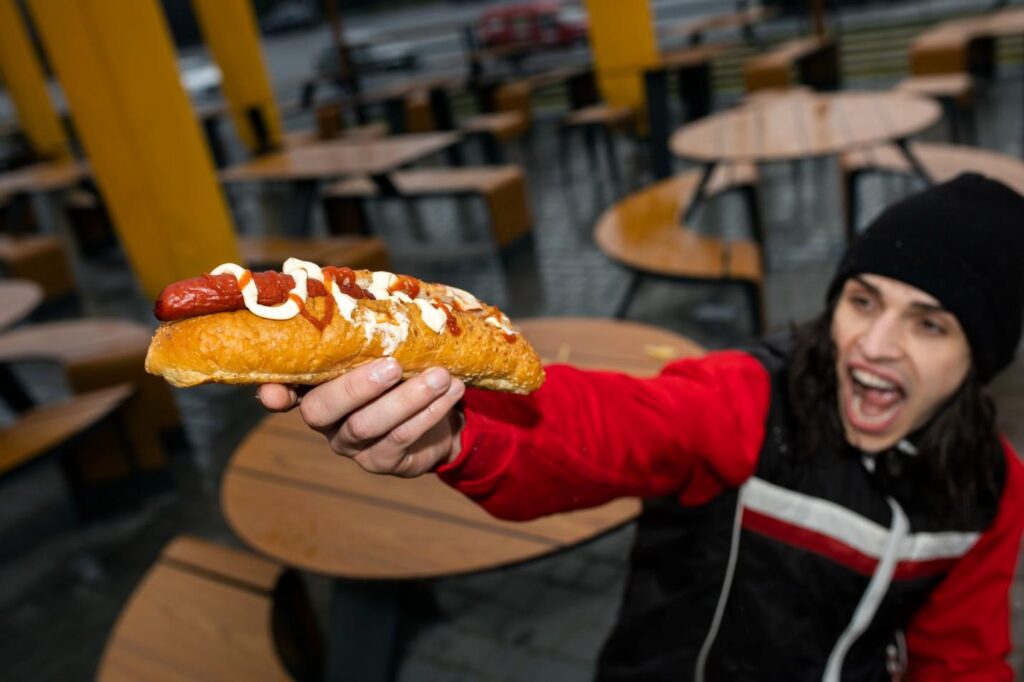
To outsiders, competitive eating might seem like a bizarre or comedic pastime. But for seasoned participants, a hot dog eating competition is a serious athletic pursuit. Participants train for months in advance, focusing on expanding stomach capacity, building jaw strength, and perfecting their rhythm.
This isn’t just about gluttony — it’s about pushing human biology to its outermost limits.
From the Hot Dog Festival 2025 to smaller community contests, these events require intense preparation. The top eaters approach these competitions the same way marathon runners approach a race. It’s not just about eating quickly — it’s about how well the body can tolerate, process, and adapt to the onslaught of food.
Chapter 2: Inside the Stomach — The Biology of Binge Eating
The average human stomach can comfortably hold about 1 liter (roughly a quart) of contents. But competitive eaters train to expand their stomachs to hold up to 4 liters — that’s over a gallon of food and liquid!
So what exactly happens during a hot dog eating competition?
- Esophageal Expansion: The esophagus acts like a conveyor belt. Competitive eaters train to minimize swallowing time, forcing down large bites quickly without choking — a technique called the “Solomon technique” which combines partial chewing and water flushing.
- Stomach Distension: As hot dogs enter the stomach, it begins to expand far beyond its normal capacity. In trained eaters, the muscles of the stomach wall become more flexible, allowing for extreme stretching without triggering the body’s satiety or nausea signals.
- Slowed Gastric Emptying: Normally, the stomach slowly empties food into the small intestine. During a competition, however, the goal is to fill the stomach as much as possible in a short period. This overloads the digestive process, causing temporary disruption in normal digestive function.
Chapter 3: Mind Over Matter — Psychological Mastery
Eating under time pressure, in front of cheering crowds, while keeping nausea at bay requires extraordinary mental discipline. The brain’s natural response to overeating is discomfort, but elite eaters train themselves to override this impulse.
According to Dr. Thomas Fagerstrom, a gastroenterologist who has studied competitive eaters, “These individuals show a unique ability to desensitize their satiety signals. They retrain their brains to ignore what would be intolerable discomfort for the average person.”
Chapter 4: The Training Regimen — Preparing for the Feast
If you’re planning to register for a hot dog eating contest, you’ll need to start training well in advance.
Here’s how top contenders prepare:
1. Stomach Expansion Training
Using water, cabbage, or watermelon, eaters stretch their stomachs gradually. The goal is to increase volume capacity without gaining excess weight or triggering long-term health issues.
2. Breathing and Posture
Maintaining proper posture improves esophageal alignment and keeps pressure off the diaphragm — both essential for maximizing intake. Some competitors even incorporate yoga breathing techniques to manage cramping.
3. Bite Efficiency and Speed
Eaters practice taking uniform bites, chewing just enough to safely swallow, and using water to aid transit. Precision is key: every second counts during a hot dog eating competition.
4. Mock Contests
Simulated runs with real or substitute foods help competitors refine their timing, reduce jaw fatigue, and prepare for the physical shock of a real event like the October food festival in Florida.
Chapter 5: After the Contest — Recovery and Risks

While the event may last only 10–12 minutes, the impact on the body can persist for days. Competitive eaters often undergo the following symptoms after a big match:
- Severe bloating
- Temporary gastroparesis (slowed stomach emptying)
- Electrolyte imbalances from rapid fluid intake
- Nausea, vomiting, and in some cases, minor intestinal trauma
Proper recovery is essential. Many eaters go on liquid diets for a day or two, followed by bland, easy-to-digest foods. Hydration is key to flushing out excess sodium and aiding digestion.
Despite the short-term strain, top-tier eaters often return for event after event — from regional fairs to major showcases like the Hot Dog Festival 2025.
Chapter 6: Is It Safe?
This sport isn’t for everyone. Doctors warn that repeated gastric stretching can cause long-term issues like:
- Esophageal erosion
- Chronic indigestion
- Gastroesophageal reflux disease (GERD)
However, competitive eaters are usually well-aware of the risks and often work closely with nutritionists and trainers to minimize harm.
If you’re planning to register for a hot dog eating contest, consult your physician first, especially if you have pre-existing conditions. Proper training and health checks are vital.
Chapter 7: A Cultural Phenomenon — Food as Performance
From state fairs to televised showdowns, the hot dog eating competition has become an American spectacle. It’s not just about who eats the most — it’s about celebration, community, and cultural tradition.
The October food festival in Florida, in particular, has become a hotbed for aspiring and professional eaters alike. Here, families gather, vendors showcase local flavors, and crowds cheer for their hometown heroes. It’s more than just a contest — it’s a full-blown party with music, games, and culinary delights.
And with the Hot Dog Festival 2025 approaching fast, this year’s event promises to be the biggest yet.
Chapter 8: Ready to Take the Challenge?
Whether you’re an aspiring competitor or just love to watch the action, now is the time to get involved. You can register for a hot dog eating contest through local event organizers or through national platforms like Major League Eating.
Want to witness the best in the business while enjoying Florida’s finest food culture? There’s no better place than the Clay Hotdog Eating Contest Festival happening this October in the Clay County Fairgrounds.
Final Thoughts: Where Science Meets Spectacle
The hot dog eating competition may seem like a quirky pastime, but it’s rooted in biology, training, and resilience. From the rigorous preparation to the rapid-fire eating and intense recovery, it’s a sport that blends mind and body in fascinating ways.
Whether you’re planning to watch or compete, don’t miss the thrill of the Hot Dog Festival 2025 or the vibrant atmosphere at the October food festival in Florida.
If you’re looking for the ultimate experience — complete with community, cuisine, and competition — we highly recommend attending the Clay Hotdog Eating Contest Festival. You can visit https://hotdogeatingcontests.com/ to book your tickets now. It’s the perfect place to witness the science of speed in action.